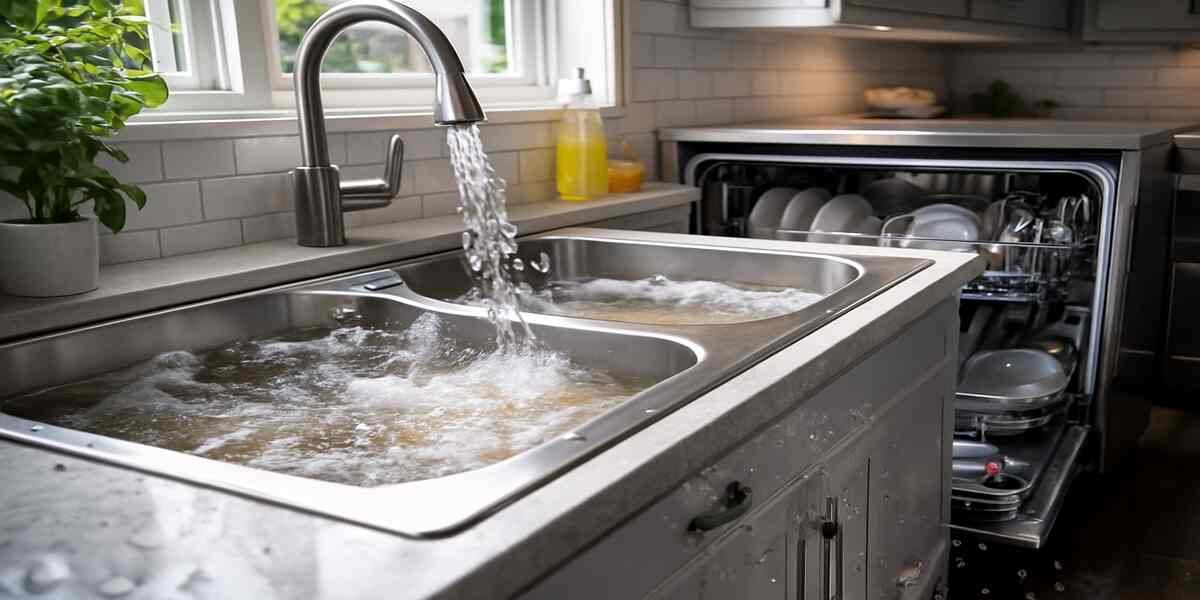
Have you ever poured some water in your sink and suddenly you see that, even though the dishwasher is running, the water in your sink is rising, and you say, Is there something wrong? This may be extremely difficult to detect, particularly when the machines appear to be functioning well. When the water however, backs up into the sink though that is usually a symptom that there is a problem with plumbing somewhere under the surface, and it is not functioning as it should. Here it might be a clogged drain, a piece that is broken or something that is concealed even further down the lines.
In this blog, we will look into the most common problems that cause the issue, how to run a little on the spot diagnosis at home, and when you should call the pros to step in. Let’s get the kitchen back to smooth running!
1. Clogged Sink Drain
The most severe aspect and could be the reason behind the reversal of water in the dishwasher, is a blocked sink drain. This is due to the fact that the sink and the dishwasher share a similar drainage pipe, and in case the sink is clogged, the dishwasher would fail to drain its water. The reason behind this accumulation is usually grease, food particles or soap stains which have been abandoned in the pipes. The hot water running, plunging the drain, or a safe cleansing solution are some ways that can help you to correct the situation.
2. The Garbage Disposal Is Full or Blocked
One of the most common reasons for the backup is a garbage disposal which might be the case with you. Collection of food waste in the disposal chute or even jamming of the waste with the blades results in blockage of the path that the dishwasher uses to drain water. What happens next is that the water is directed back into the sink. Running only the disposal with cold water often resolves the matter.
3. The Dishwasher Filter Is Dirty
Your dishwasher has a filter which is made to catch leftover food particles. The water gets hindered if this filter gets clogged and the draining inside the machine stops as a result. The draining system then gets buried under water and eventually pushes water back into the sink. This is prevented by cleaning the filter on a regular basis. Most times all that is required is a quick rinse in warm water and then the dirt and the accumulated debris is washed off to restore normal flow.
4. Problems with the Air Gap
If there is a blockage in the air gap area, then it is very likely that water will back up easily in the case of your dishwasher that uses an air gap. In spite of the air gap that will not allow the dirty water to reenter the dishwasher, in case it is clogged or dirty, the water will find it very difficult to drain out. Similarly, the drain hose should also be properly set and not kinked in any way. When it is bent, blocked, or is too low the flow of water is interrupted.
5. Greater Problems in the Drainage
Although in some cases the dishwasher cannot be the location to search for the issue, it can very well be within your home plumbing system. The blockage of the main line of drainage may slow down the whole supply of water in the house. Such pressure forces the water to flow back into the sink, especially when activities like running a dishwasher that demand a lot of drainage are underway as per the expert staff.
Conclusion
A situation of a dishwasher overflowing to the sink can be a sloppy one, but the cause of the problem is normally very simple and can be remedied easily. Most of the issues can be prevented by regularly cleaning, proper disposal, and a quick inspection of the crucial components. But in the case, when the problem continues to repeat itself then it is preferable to call in a plumber in order that your kitchen is functional, secure and stress-free.