Removing Dried Glue from Carpet and Fabric Easily
You will have glue accidents when you and your kid are crafting, when you are fixing a broken lamp, or when you are conducting home repairs. Though adhesives come in handy, they may ruin carpets and fabrics when used inappropriately. Fortunately, dried glue may be removed with intelligence and easy tricks. Individuals seek the assistance of bond cleaning Brisbane when raw stains are involved, such as at the end of a lease. The following are some of the most effective ways of removing common glue and adhesive stains at home.
1. The first should be identified as the Adhesive one.
Before you begin cleaning, make an attempt to figure out what kind of glue you are dealing with. It could be school glue, super glue, craft sticking and hot melt glue. Depending on the type of adhesive chemistry, adhesive removal techniques may vary enormously. Also, label tags or remaining pieces of packaging can always be found.
2. Delicately Efface Surplus Matter
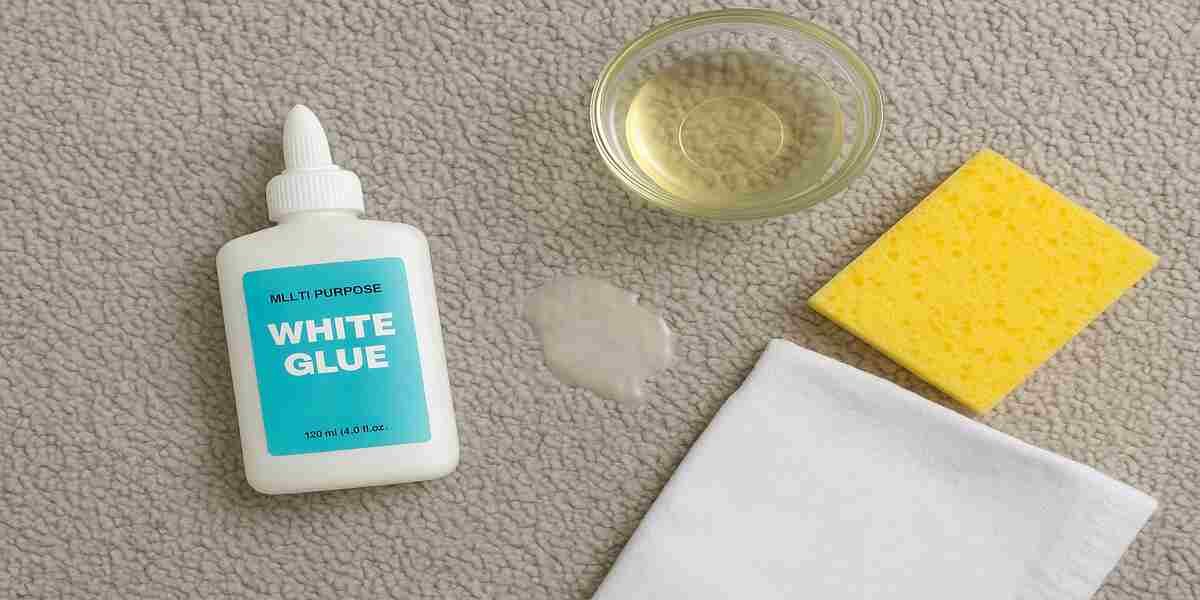
Remove as much of the dried glue as possible by scraping with the edge of a blunt knife or a teaspoon, or the corner of a dried-up credit card. Start at the outermost point and work inwards so that you do not rip out the fabric or tear out threads. What you want to do is get rid of that brittle outer layer cleanly without making a larger mess.
3. Soften with Hot Water or Vinegar
In case of adhesives, which are water-soluble, wet the worn stain lightly with warm water. Cover it up with a wet cloth and leave it there to sit a little bit (between 15 and 30 minutes) so the water may soften the glue. In case the glue is more persistent, dab white vinegar on the area first, and leave it to slowly disintegrate the glue.
4. Rub Gently Alcohol Acetone
To remove heavy super glue or strong adhesives, a little rubbing alcohol or acetone can be applied to a piece of cotton. To begin with, always test it in a place which is out of sight–someplace where it cannot be seen in a seam of a garment or on one corner of a light-colored rug. These fluids interrupt the adhesion of the glue in a short time, but also are capable of lifting or staining surfaces.
5. Blot, not rub,
When the glue is softened, a fresh white cloth should be pressed in the area which will rise. Scrub: rubbing adds the glue even further and distributes it. Start with the edge of the stain and go to the centre to make the spread confined.
6. Rinse or wash (Clear)
To get rid of a leftover adhesive, pour fresh water onto another cloth, and then wipe it. After that, wash the cloth as indicated on the label.
7. Stubborn Cases should be handled by Call Professionals
In case the glue is sticking or in case you are working on valuable carpets, it is prudent to get assistance. bond cleaning Mermaid Beach usually work with such stains removal in the process of conducting an end-of-lease cleaning and are quite familiar with treating different materials in ways that are safe and effective.
Conclusion
Dried glue does not need to be permanent, although with some sense of method and a bit of time. The following simple techniques will remove stains and stains that have damaged your fabric and carpet-so it can get back to its original form – clean, fresh, and stain-free.
Also learn about Simple Ways to stop mould and mildew at home