Adhesive Remover Ways To Remove Sticky Residue
Most label goo, tape bits, or dried adhesive stay put despite a quick wipe. Oddly enough, mild fixes handle it well – no harsh cleaners needed. Try combining things you already have in your pantry before reaching for anything harsh. This post walks through gentle methods that lift grime safely. Surfaces stay unharmed when using these household fixes. Start peeling when the goo loosens quickly, then the effort drops right away. Knowing this mix changes cleaning stubborn grime; suddenly, it slips free.
1. Why Choose a Homemade Adhesive Remover?
Baking soda mixed with oil does the job without burning surfaces. Lately, more people choose gentle fixes – especially when kids or pets leave sticky marks behind. For one thing, clean air matters more when there’s no sting in every breath. Wood floors and freshly painted panels hold up better under kinder touch. Nothing beats peace of mind when surfaces survive without scratches. Most of the time, what makes a difference isn’t expensive; it is just stuff already beneath the faucet. Little do-it-yourself tweaks build slowly: cleaner air at home, lighter trash cans on pickup days, week by week. A shift happens without fanfare.
2. Basic Ingredients for DIY Solutions
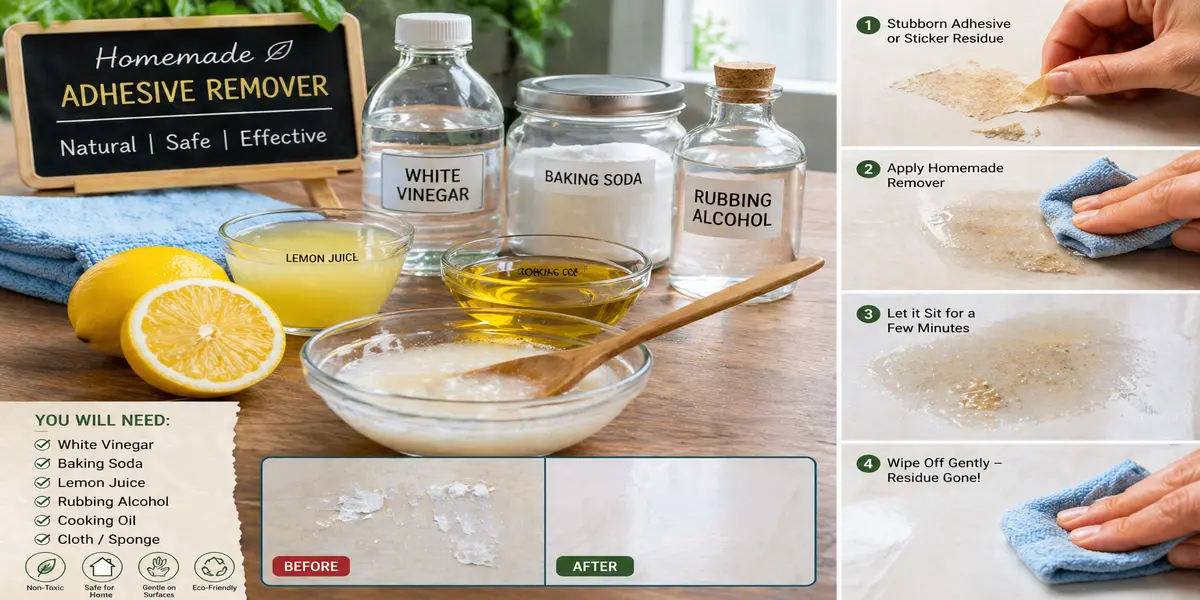
Grab stuff you already own. Cleaning dried glue needs no fancy tools. A splash of vinegar works well alongside baking soda; they begin breaking things apart right away. That dirt begins sliding off once it feels the mix. Slowly, oil from frying loosens what sticks behind. Then comes sunlit lemon, cutting through gunk like morning light sliding over glass. Victory feels quieter now, peeling away sticky mess without the struggle. Near window edges or cabinet gaps, spills lose their grip without scratching what’s beneath. Power shows up gently, no sharp edges, pretending to work better. Jars surrender their stubborn tags within moments of meeting the liquid. Help arrives from bottles you’ve had all along, doing big jobs in small doses.
3. Vinegar-Based Solution
White vinegar comes first. This liquid cuts through grime without much effort. Pour a bit onto a cloth, which works on most household surfaces. Place the wet material right over sticky areas, wait around five minutes. Soaking helps dissolve what won’t wipe away fast. Some cleaning products use tough chemicals, but in bond cleaning this way doesn’t touch those at all. Most cleaners rely on strong chemicals – this one skips them entirely. Once it breaks things down, grab a rag and wipe everything off, no residue left behind.
4. Baking Soda and Oil Paste
Out comes the baking soda along with a hint of cooking oil. These tag in alongside other DIY solutions that lift sticky leftovers. The blend thickens up, forms a goop built to beat hardened residue. Place it right on the spot where gunk holds tight and wait a few breaths, just two or three ticks of the clock. Once it hardens, loosen it gently using a soft fabric. Most common dirt left behind after normal cleaning? This deals with such areas easily on both plastic and metal if pressed well. Since it’s gentle on surfaces and hands, repeated application seems worry-free, particularly in places where brushing doesn’t help.
5. Lemon Juice Method
Peel back grime using what sits right there on your shelf. Lemon juice drips in, doing its job without fuss on dried spills. Swap chemical jars with fruit found outdoors. That zing from ripe citrus? It breaks gunk apart, slow and steady. Next time, give it a go; sticky spots vanish when they should not. Wait a while after applying; moments of pause make the difference. Whether fighting seal residue or tag gunk, no harsh smells invade, just results without artificial junk. What remains is crisp air, spotless glass.
6. Rubbing Alcohol Solution
A little rubbing alcohol wipes away nearly every stubborn spot. Most go clear after just one touch. A soft cloth carries it lightly across stubborn patches until residue parts like morning fog. When past efforts stall, this step slips through where others slip up. Fumes drift off quickly, no poison left behind, just clean surfaces waking beneath its touch.
7. Warm Soapy Water Method
Bubbles rise when warm water meets soap, making cleanup feel almost effortless. Though honey seems soft, team it with dish liquid and heat to loosen grime without force. A bit of a damp cloth moves slowly, piece after piece, till washing sweeps away what stays. Softness isn’t lacking strength. This blend skips harsh stuff, keeps surfaces safe. Sticky spills wash away faster when they’re new instead of crusted on overnight. A sponge and soapy water handle it without needing extra tools. In vacate cleaning services, this same method is often used as part of safe and effective surface cleaning.
8. Tips for Best Results
Wait first, and then try the homemade adhesive remover on just one little area. That step matters because surprises happen. Wait a few moments while it works. Sometimes, patience outdoes speed when the grime sticks hard. Softening takes quiet effort, not force. Reach for a rag, perhaps something gentle like a toothbrush if things stick hard. Pressure that’s too heavy invites scratching. Safety of the surface matters more than anything else. Even careful moves often lead nowhere good. Gunk still there? Try again, going through these motions a second time might just keep things safe and working right.
9. Extra DIY Method You Can Try
Oil helps loosen a sticky mess if you put some on the spot. Since oil breaks down adhesive, the residue tends to wipe away easily. After dropping it on, give it a few minutes before using a cloth. Surfaces typically handle this well, especially areas stuck with leftover goo. It demands minimal effort, hardly any time, yet uses what’s already beneath your sink.
Final Thoughts
Most people find homemade non-toxic adhesive removers kind of quiet in how they help – over time, the body and room feel less weighed down. Minutes to mix, cheap to make, handles residue from stickers or masking tape just fine. Using kitchen staples like lemon juice or olive oil keeps surfaces unharmed, unlike chemical versions. With milder ingredients come lighter smells, making the air indoors feel clearer after wiping down shelves. Shifting from plastic bottles under the sink to glass jars with natural blends tweaks small moments, building up softly through regular use. Alongside this, an extra helpful idea is how to make reusable cleaning wipes at home?